|
| Being
sick in France (#1) |
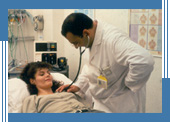
- If you have a problem, you need
to go see a doctor, go to the hospital
or go to the next-door pharmacy.
- Do not panic ! France has good
doctors and a very good Social Security
system !
- Read Harriet's column
about healthcare in France and discover some comparative Facts and Figures..
|
|
|
|
|
|
|
|
| French
"Social Security" made simple |
|
Practical tips : where to go .... |
|
(Remember : in France "Securite Sociale" does not mean "retirement pension" like in the US : it means the whole social system of Health, Family benefits and retirement pensions)
-
As a matter of principle, everyone working in France must
contribute to the French Social Security system and everyone
(French or not, working or not, unemployed, child or retired,
legal or illegal immigrant) is entitled to benefit from it. There are few (recent) exceptions to this principle but it is maintained (with CMU : Couverture Maladie Universelle
which means "health plan for everybody" only 0,1% are not covered). The system is rather complex and
considered bureaucratic
when it comes to create a new company (but not for the patients).
-
The system is threefold : Health,
Family and Retirement, each of them has different structures
and financing ; they are managed by the "partenaires sociaux" (see the meaning of this important concept) on a joint and equal basis, the State being only the "referee" ; each of them is financially autonomous (no
taxpayer's money - except to subsidize CMU- but contributions by employers and employees
to make it balanced) : to understand it better : see the anatomy of a paycheck ;
-
The Health system (Assurance
Maladie) is based on the concept of providing a large amount
of help for any medical need, and total help when it is serious
: on the basis of a standard cost, medical care (doctors appointments
and visits, dental care, etc..) is reimbursed around 80%, medicine
from 80% when corresponding to a real medical need to 40% for
less needed and of course 0% for others ; standard cost for a
doctor is 25 Euros (sometimes, they can charge 30 Euros or more:
dépassement d'honoraires) ; serious illnesses,
including those due to old age, are covered 100%. Practically
speaking each person has a chip card (Carte Vitale) which
is read by the doctor's or pharmacist's terminal and a 13-digit
"numéro de Sécurité Sociale".
-
The health system is a key-element
of the French national identity : the "three best
symbols of the French nation" are the flag, the health system and
the Marseillaise (source : survey TNS-Sofres March 2005)
-
Contrary to what one could expect
from a large, state-owned and centralized organization, the system
is very efficient : the administrative cost of the health
system is around 4,5% (for US private insurance companies : 10
to 13%) and 1,2% for the retirement system (vs. around 10% for
most pension funds). The health system reimburses very quickly
(after four days).
-
The Social Security structure
is managed on a paritary basis : each regional organization
(Caisse) is managed by a board composed 50/50 of representatives
of labor unions on one side, employers associations on the other
side, with the State playing the role of a referee ; the financial
contribution of the patient is smaller than the contribution of the employer who brings most
of the funding. The state is considered responsible
of its good functioning, but it is not accurate to call it a
"socialized system". See why.
-
The
Family system (Allocations Familiales) is a financial
help to all families (whatever their income) plus various services
such as day-care or vacation centers (according to income) ;
when a family is expecting a child, it gets approximately 2,000
Euros in three installments (the first two of them corresponding
to a mandatory medical visit, the third to the birth) ; then
the family receives a monthly allowance till the child is 20
(for two children or more, around 100 Euros/month/child) : see detailed numbers ; this is not the only allocation and this organization ("Caisse d'Allocations Familiales") yearly distributes enormous allocations (Euros 72 billion in 2009) to millions of families : for families of two children or more, to help people to keep their old parents in their home, for children with a handicap, and many others… (See details)
-
The Retirement system
(Assurance Vieillesse) provides a minimal pension (in
the range of 750 Euros/month) to any person who has worked 40
years : click here for more
|
|
What to do if you are sick?
-
If it's minor, ask your pharmacien (pharmacist) : his job is not only to sell medicine to help people and give advice
-
If it's more serious, you can
:
-
see any French doctor : unless he/she is one of these doctors specialized in US patients because he/she speaks (or pretends to speak) English, he will charge you the normal French price (25 € as of today) and the only diference with French patients is that you won't be reimbursed of it.
-
or : Call SOS Medecins (08 20 33 24 24) : you have to descrive your problem (in French), they come within 2 or 3 hours for a fee of around 100 Euros and provide a very good service
- In case of emergency, you can :
- go to the Urgences (Emergency) of the nearby hospital
- or : call the SAMU (telephone : 15) who comes very quickly and charges nothing
DID YOU KNOW
THAT....? In France, the maternity leave is 16 weeks minimum
(of course paid 100% of the salary!), plus one month minimum
if the baby is breast-fed ; "paternity" leave is two
weeks ; new mothers spend 3 to 6 days in the hospital.
Emergency : about the SAMU ...
In France, since 1968, the entire country is covered by a (public) organization called SAMU (coordinating regionally the emergency mobile services of the local hospitals, called SMUR). SAMU is called by dialing 15 (and "SAMU 38" is the name of the service for the "departement" #38). They operate with ambulances and helicopters. Each crew is composed of a driver, a physician (emergency or resuscitator) and a nurse, with the equipement allowing a medical intervention on the spot. The first difference with the US is that the system is homogeneous and you get the same service all over the country, from Paris to the most remote village. But the major difference, which makes the efficiency of the system, is that, contrary to the US, the crew includes a physician and the medical treatment does not have to wait until the patient reaches the hospital. Figures disclosed in the US in 2015 showed that the mortality after a heart attack or a stroke in much higher in the US, partly due to the organization of the emergency mobile system.
HOW TO READ
A FRENCH "NUMERO DE SECURITE SOCIALE" ? The ten first digits
mean something : first digit : 1=male, 2=female, then XX=year
of birth, XX=month of birth, XX="département"
of birth (99 for outside France), XXX=code of the city in the
"département", XXX=number. The "numéro
de SS" is used for many official purposes.
In France, the health system is less stressful that in the US !
The French health system is affordable, efficient and it protects you from the terror of being bankrupted by your health condition. Erica Rex, an American journalist who moved to the UK and settled in France to treat a breast cancer writes (NYT Intl Jan 5-6, 2019) : "Medical chat is common in French waiting rooms.... To my friends in the US, this casual attitude seems foolish, even risky. But in France medical privacy is irrelevant. No one will lose her job because of a lengthy convalescence. There is no possibility that pre-existing conditions will make insurance unaffordable. Unemployed people still receive treatment. Huge medical bills do not reduce ordinary citizens to a state of existential terror. The absence of unease over health care alters the texture of French experience. We get cozy in waiting rooms. ....France for me was not a vacation selection. Moving to Europe was a choice weighted against other, grimmer options for health care, which included the strong possibility of being bankrupted by cancer treatment and winding up at the mercy of New York State's welfare system .... Too many Americans do not realize how much better off they would be if they felt safer about access to medical care."
|
-
Any
system offered by a company to its staff is in addition
to these national systems and health insurance and retirement
pension NEVER depend on the financial situation or even the survival
of your employer(s) or former employer(s). For the French,
it is just unthinkable that, if you lose your job, you also lose
your health plan : those two hazards must not be linked.
This is a typical example of what the French call their "social model"
and one of the few where, in my opinion, the
USA could learn something from the French experience. Read
my opinion about it "Socialized
medicine : give me a break" or "the best place to be sick is France!".
-
A few amendments to the
system in the recent years :
-
You have to pay ONE Euro more
(not reimbursable) for every visit to the doctor (when it was established a few years ago, many people
said that asking for such a huge financial effort from the patients
was a shame!!)
-
before you see a specialist
(except for gynecologists, ophtalmologists and psychiatrists),
you must see a GP first (otherwise, you'll be reimbursed a little
less)
- A few historical landmarks :
-
- Inspiration : the Bismarkian model in Germany around 1883
- First decisions : the Front Populaire in France in 1936
- What the French call their "modele social" : the 1945 Laws according to the program of the Conseil National de la Resistance (March 1944)
- If you have a specific question (for instance : what if I retire in France ? I worked in France ninety five years ago, do I qualify for SS ? etc...), please do not ask me
! This is a rather complicated field and only CPAM (health coverage) or CNAV (retirement) can answer you.
|
|
Name of useful medicine
...
Here is a list of common medicine
you can buy without a prescription in any French pharmacy :
- Diarrhea : IMMOSEL, SEPTIDIARYL,
...
- Headache : ASPIRINE, DOLIPRANE,...
- Tonsilitis : ANGISTRAY, ...
- Hemorroïds : PREPARATION
H, ...
- Bruise : ARNICAN, ...
- Acid indigestion (this illness
is hardly known in France) : MAALOX, GELUSIL, PEPSIDAC, ...
- Troubles associated with periods
: MIGRALGINE, ...
- Sore-throat : COLLUSTAN,
STREPSIL, ...
- Common cold (runny nose) : FERVEX,
RHINOFEBRAL,...
- Insomnia : DONANMYL, ...
and :
USEFUL TIPS.....In
France, pharmacists have the right to give medical advice.
Rather than go to the doctor when not seriously ill, many people
prefer to consult the pharmacist for what medicine to take. They
are generally very helpful . Try to avoid the word "allergy", unless it is a medical fact : the French do not take it very seriously....
|
| Health care in France |
|
For expats (section to be developped) |
-
Preventive
medecine : Medecine du
travail (labor medicine) : all companies, whatever their size,
must provide their staff with an annual visit to a doctor ; in
big companies it is a in-house doctor, in small companies an
external doctor who comes for the annual controls. All expenses
are paid by the company and of course the employee does not pay
a cent. The 20-minute visit includes whatever check-up seems
appropriate (heart, eyes, stress, depression...). The doctor
cannot prescribe medecine but can prescribe a visit to the doctor
if something new that is wrong or needs a more thorough check
is detected. For preventable mortality, a scorecard by the Commonwealth
Fund (IHT July 17, 2008) ranks France first (followed by Japan
and Australia) and the USA last (after Ireland and Portugal).
-
Sick leaves : the law is that up to 20 days, the Securité Sociale reimburses the salary to the employee with two limitations : not the first 3 days ("jours de carence") and up to a maximum ("plafond"). Most companies have additional agreements to eliminate these two limits and, in fact, for almost everybody, it does not cost anything to report sick. Sick leaves represent, on average, 14.5 days per year per employee : less in Paris (10 days) than in the South (26 days), less in construction (11.8) or commerce (13.6), more in industry (14.4), services (16.1) or the health sector (21.3). Quite expectedly, people call in sick on Friday (54%) or Monday (32%) more than on the other days. Many companies or administrations have created a special incentive for people who are never or rarely sick ("prime de présenteisme"). (Source : Le Point 31/5/2012). Of course, some people take advantage of the system and the number of un-justified sick leaves is particularly high in the public sector : see numbers.
-
French doctors are not very different from American
doctors, except they make much less money (three or four times?)
and are probably much more accessible, less protected by a dragon-secretary.
-
The French Health system is
efficient and affordable : I consider it one of the few
fields in which France
can be proud of herself when comparing with other countries.
See the (very) few other fields of French excellence (no : it
is NOT food and fashion...). And the French live older than the Americans !
Click here for a comparison of a few ratios between France and the USA.
-
Forget your prejudices about
what so many people call "socialized medicine"
without knowing what it is : look at the facts ! In France you
can choose freely your doctor and he/she is free of his/her prescription
: you are not treated by the governement ! Read my
editorial about it.
-
Quite unexpectedly for a nation where people always complain, the French are rather satisfied with their health system. According to a 2010 international poll, 61% of the French consider the organization of their health system good to excellent (against 44% for Americans) and 82% would not go anywhere else, even for cheaper. The most satisfied are the Austrians, the least are the Poles. See detailed figures.
- Read my (chauvinistic) point of view about the French Health system . Click here
to read Harriet's column about Health in the Paris Pages (July
2000). Some people disagree with this viewpoint : see a letter
from Anne.
- For expats, AARO (see American
Associations) provides health insurance for its members.
|
|
-
For more information, read AAWE and for Expats, check with your company and contact
associations such as AARO , visit the official site of French Social
Security (in French) or read a column in the International
Herald Tribune ("French Lesson",
14/8/2007).
-
A good
site
dedicated to expats gives a lot of information.
USEFUL TIPS.....
Many Americans, who do not speak French and/or do not trust French
doctors, try to find a " quasi-American " doctor.
There are a few doctors who work a lot (or only) for the American
community. They are not any better or worse than others but some
of them have figured out that Americans generally do not know
the French health system and can be charged any price : they
take advantage of it. Most French people are horrified about
that!
DID YOU KNOW
THAT .... ? The very concept of medical emergency is not
seen the same way in France and in the USA. In the USA the Emergency
staff is a driver whose job is to take you as fast as possible
to the hospital, whatever your condition, in a fast ambulance.
In France, the SAMU team includes a MD whose job is to do as much as he
can before taking you to the hospital in a more heavily-equipped
ambulance. Both ways have their pros and cons, but dont be horrified
if you see an ambulance NOT moving ....
USEFUL TIPS...Do
not panic if a doctor asks you to undress completely with
no nurse around. Unlike the U.S.A., there is no regulation requiring
the presence of a woman nurse with a male doctor or vice versa.
USEFUL TIPS..
If you have a sore-throat and the pharmacist prescribes suppositories,
don't be surprised : it is a traditional (and quite effective)
treatment!
DID YOU KNOW
THAT .....? The French often mention a disease which does not
exist elsewhere: the "crise de foie" (literally
: liver crisis). The "crise de foie" covers a wide
range of illnesses from hang-overs to diarrhea, but the liver
has nothing to do with it. On the other hand, if you literally
translate "stomach ache" to a French doctor, he will
look at your stomach whereas it is your intestine which is in
trouble.... In French "mal au rein" (literally : kidney
ache) means backache and "mal au coeur" (literally
: aching heart) means being nauseated.
|
| To related pages
: a column of the Health system (#2), an American
article on the French health system (#3), etc.... |
|
To table
of contents
To top of the
page
Back to home
page
|
Harriet Welty
Rochefort writes articles and books about France and the French.
Order her books :
- "Joie de Vivre", Secrets of Wining, Dining and Romancing like the French, St.Martin's Press, New York, 2012
- "French Toast, An American in Paris
Celebrates The Maddening Mysteries of the French", St.Martin's Press,
New York, 1999
- "French Fried, The Culinary Capers
of An American in Paris", St.Martin's Press, New York, 2001
More on Harriet's books (excerpts, upcoming
events, testimonials, etc..)
|
| To
email
me |
If you like
this site, please bookmark it or create a link! |
|